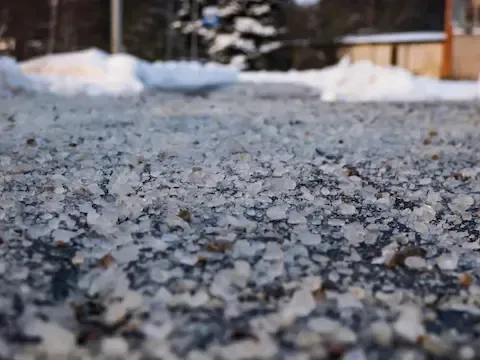
November De-Icing Stockpile Plan for Dubuque IA Homes
Building a November de-icing stockpile for your Dubuque home means buying the right product, estimating the correct quantity, and storing it safely before the first ice storm arrives. Dubuque winters typically bring freezing rain and slick conditions starting in late November, so waiting until December puts you behind. A basic household plan covers bag count math based on your driveway square footage, a choice between rock salt and pet-safe blends, and a dry indoor storage spot. Get this done before Thanksgiving and you will not be scrambling when Mississippi River valley cold snaps hit overnight.
How Much De-Icing Product Does a Dubuque Home Actually Need?
Start with your driveway and walkway square footage. A typical Dubuque residential driveway runs roughly 400 to 600 square feet, and standard rock salt covers about 500 square feet per 50-pound bag at a light application rate. For an average home with a two-car driveway and a front walk, plan on two to three 50-pound bags per storm event. Dubuque averages around 35 inches of snowfall per season, with ice events scattered across December through February. A reasonable November stockpile target is six to ten 50-pound bags of primary de-icer, which covers three to four storm events before you need to resupply. If your property has a long driveway, a rear patio entrance, or steep sections near Dubuque's characteristic bluff-side grades, increase your estimate by 30 percent. Steep grades on streets like Grandview Avenue or properties on the ridge above downtown demand more product per square foot because runoff carries melt away faster.
Which De-Icing Product Should You Stock?
Rock salt, or sodium chloride, is the lowest-cost option and works reliably down to about 15 degrees Fahrenheit. For most Dubuque winters, where temperatures frequently hover between 15 and 30 degrees during storm events, plain rock salt covers the majority of situations. However, if you have pets that use the driveway or walkways, the coarser rock salt crystals can irritate paws. Calcium chloride works at much lower temperatures, down to minus 25 degrees, and generates heat on contact with ice, making it faster-acting. It costs roughly twice as much per pound. Magnesium chloride sits in the middle on both price and effectiveness and is generally gentler on concrete and vegetation. For a Dubuque home with dogs or outdoor cats, a magnesium chloride or labeled pet-safe blend is worth the added cost. Stock primarily rock salt for volume events and keep one bag of calcium chloride for genuinely dangerous freezing rain nights when temperatures drop hard.
Where Should You Store Your Stockpile?
Moisture is the enemy. Salt products clump and harden when exposed to humidity, turning a usable 50-pound bag into a solid brick that is difficult to spread evenly. Store bags on a wooden pallet or a plastic shelf raised off a concrete garage floor, because concrete draws moisture upward. A corner of an attached garage works well for most Dubuque homes. If you only have a detached garage or shed, wrap stacked bags in a plastic tarp and seal the edges with bungee cords or tape. Do not store de-icing product next to fertilizers, grass seed, or any organic material. Keep your spreader or scoop beside the stockpile so you are not searching for tools at 6 a.m. before school drop-off on an icy morning. A dedicated five-gallon bucket with a lid works as a ready-access container you can refill from your main bags each week.
When Should You Apply Versus Call a Professional?
DIY de-icing works well for routine frost mornings and light freezing drizzle. Where it becomes difficult is with freezing rain accumulation above a quarter inch, black ice on sloped surfaces, or back-to-back storm events when your stockpile depletes faster than expected. Dubuque's geography creates microclimates, with the riverfront and low-lying areas near the Port of Dubuque sometimes icing earlier and more severely than neighborhoods on the bluffs. If your property is on a hill or you share a driveway with elderly family members, having professional backup matters. You can read more about how salting products interact with different pavement types in this complete de-icing primer before finalizing your product choice. For properties where coverage consistency and liability matter, De-Icing services through a local professional can handle the heavy events while your stockpile covers the small ones.
What Are the Common Stocking Mistakes Dubuque Homeowners Make?
Buying too little is the most common error, especially for first-year homeowners. People estimate one bag and run out after the second application. Buying the wrong product is the second mistake: calcium chloride purchased for all-season use costs more than necessary when rock salt would handle 80 percent of events. Storing bags flat on a bare concrete floor and finding them brick-hard in December is a third recurring problem. Finally, waiting until the first storm to buy creates real shortages at Dubuque-area hardware stores. Home Depot, Menards, and local farm supply stores in the region do sell out of de-icer during storm forecasts, sometimes within hours of a winter weather advisory. Buying in November, before demand spikes, protects both your supply and your budget since pre-season pricing is typically lower than storm-week pricing.
