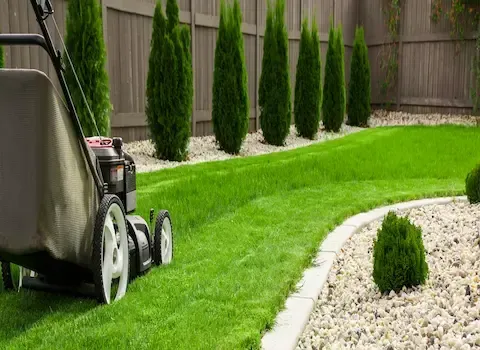
How Often to Mow Your Dubuque IA Lawn in Summer Heat
Mow your Dubuque, IA lawn every 5 to 7 days during summer heat to keep cool-season grasses like Kentucky bluegrass and tall fescue healthy. During intense heat or drought stress in July and August, you may stretch intervals to 10 days and raise your blade height to 3.5 inches or higher. The Mississippi River valley humidity and summer temperatures around Dubuque create specific stress conditions for lawns. Mowing too short or too frequently during hot spells damages root systems and invites weeds. Adjust your schedule based on actual growth, not a fixed calendar.
How Often Should You Mow a Dubuque Lawn in Summer?
During active growth in late spring and early summer, every 5 to 7 days is the right rhythm for most Dubuque lawns. Once peak heat arrives in July, growth naturally slows. At that point, mowing every 8 to 10 days is often sufficient. The key rule is the one-third rule: never remove more than one-third of the grass blade in a single cut. If you let your lawn reach 4.5 inches before mowing, do not cut below 3 inches in one pass. Cutting too aggressively in summer heat stresses roots, turns tips brown, and makes the lawn more vulnerable to drought.
What Blade Height Should You Use During Dubuque Summers?
Raise your mowing height to 3 to 3.5 inches for Kentucky bluegrass and tall fescue lawns in Dubuque during summer months. Taller grass shades the soil, reduces moisture evaporation, and keeps root zones cooler during July and August heat waves. Many homeowners in the Eagle Point and Asbury Road areas make the mistake of scalping their lawns trying to reduce mowing trips. Cutting short may delay the next mow by a few days, but it weakens the turf and creates bare patches that weeds quickly colonize. A higher cut protects the lawn far more effectively than frequent short mowing.
Does Dubuque's Climate Affect Summer Mowing Frequency?
Yes, significantly. Dubuque sits along the Mississippi River valley, where summer humidity levels remain higher than much of Iowa. That humidity can accelerate fungal growth if you mow wet grass or leave clippings bunched on the surface. Mow when the grass is dry, ideally in the morning after dew has evaporated. High humidity combined with heat also means that stressed turf recovers more slowly after an aggressive cut. Homeowners near Bunker Hill Golf Course and along the bluffs should pay attention to soil drainage too, since water pooling after rain can create soft, disease-prone turf that needs extra care before mowing.
Should You Bag Clippings or Mulch Them in Summer Heat?
Mulch clippings back into the lawn whenever possible. Fine clippings decompose quickly and return nitrogen to the soil, reducing the need for supplemental fertilizer. In Dubuque summers, grass grows fast enough in June that clippings can be dense. If you are mowing on schedule and not letting the lawn get too long, clippings will filter down through the canopy without smothering the turf. Bag only when the lawn has grown excessively between cuts or when disease pressure is high. Leaving thick clumps of clippings on the surface in humid Dubuque summers creates ideal conditions for fungal disease development.
When Should You Skip Mowing Altogether?
Skip mowing when the lawn shows signs of drought stress: grass blades folding lengthwise, a blue-gray color instead of green, or footprints remaining visible after walking across the lawn. Mowing a drought-stressed lawn compounds the damage because the plant cannot recover quickly from leaf removal when it is already under water stress. Dubuque typically receives adequate summer rainfall, but dry stretches do occur. If your lawn has not grown measurably in a week, there is nothing to gain from running the mower. For Lawn Mowing schedules that account for seasonal stress, working with a local service that understands Dubuque conditions makes a real difference.
What Are the Most Common Summer Mowing Mistakes in Dubuque?
The most common mistake is mowing on a rigid weekly schedule regardless of actual grass growth or heat conditions. Another frequent error is mowing with dull blades, which tear grass rather than cut it cleanly. Torn grass tips turn brown and open the plant to disease. Check blade sharpness at least once during the mowing season. A third mistake is mowing during the hottest part of the day, typically noon to 3 p.m. The stress of midday heat combined with mechanical cutting can cause significant turf damage. Early morning or evening mowing is better for the grass. You can find additional guidance in our full mowing primer covering schedule, cost, and seasonal timing for Dubuque properties.
How Do You Know When to Adjust Your Mowing Frequency?
Watch the grass itself rather than the calendar. If your lawn reaches 4 inches before your scheduled mow, shorten the interval. If it has barely grown after 8 days, hold off. A healthy summer lawn in Dubuque maintained at 3 to 3.5 inches will tell you clearly when it needs attention. Consistent observation over a few seasons helps you develop a natural rhythm that fits your specific yard, soil type, and sun exposure. Shaded yards near tree lines on the west side of Dubuque may grow slower and need less frequent cuts than sunny open lawns in the Asbury or Cascade Road corridors.
