Steep Driveway Snow Clearing Tactics on Dubuque IA Bluffs
Dubuque's bluff neighborhoods sit well above the Mississippi River, and that elevation comes with a cost every winter. Driveways along Grandview Avenue, West Third Street, and the ridge roads off Julien Dubuque Drive can pitch to grades of fifteen percent or steeper, turning a routine snowstorm into a genuine hazard. Standard snow removal approaches designed for flat Midwestern lots simply do not translate to hillside conditions. The physics of traction, drainage, and pass sequencing all change when your driveway rises sharply from street level to garage, and understanding those differences is what separates a cleared surface from a frozen ramp.
Why Steep Grades Demand a Different Approach
On a flat driveway, gravity is a non-factor. On a bluff driveway, gravity is actively working against every piece of equipment you bring to the job. A snow blower or plow pushing uphill loses traction progressively as the auger or blade lifts snow and shifts the machine's weight forward. Pulling downhill is faster but creates runaway risk if the operator loses footing or the machine accelerates unexpectedly.
Ice formation is also more aggressive on steep grades. Cold melt water from upper sections runs downhill and refreezes at the lowest point of the driveway or at the street apron, creating a thick glaze precisely where vehicles need to brake and turn. Dubuque winters regularly cycle through freeze-thaw events driven by cold air dropping off the bluffs and warmer moisture rising from the river valley, which means that ice layer can rebuild within hours of being broken up.
The concrete or asphalt surface itself matters more on a grade. Older bluff driveways with cracked or rough pavement give equipment an uneven base to work from, and aggressive steel-edged tools can catch a lip and jerk the operator unexpectedly. Inspecting your surface condition before the first serious storm of the season is worth the fifteen minutes it takes.
Pass Patterns That Work on Inclines
The most reliable pattern for a two-lane-wide bluff driveway is a top-down center cut followed by side passes that angle discharge away from the slope. Start at the top near the garage, open a center strip throwing snow to one side, then walk back up and open the other half. This keeps the heaviest accumulation from being pushed ahead of you downhill where it compacts and becomes difficult to move.
For driveways narrower than two equipment widths, a single-pass downhill run with the blower angled to throw laterally is the safest method. Never direct discharge straight downhill on a steep bluff driveway. Snow thrown downhill on a grade can land on already cleared surfaces and refreeze, or worse, blow back into the operator's path.
When using a plow truck on a residential bluff driveway, the preferred technique is back-dragging from the garage apron downward in short pulls, then angling the blade to push accumulation to one side at street level. A professional running Driveway Snow Clearing routes in Dubuque's hillside districts typically uses this method to protect garage doors and keep the upper driveway from becoming a staging area for heavy loads.
Equipment Selection for Bluff Conditions
A single-stage snow blower is generally not adequate for grades above ten percent. The rubber paddle auger that contacts the pavement provides traction on a flat surface but can spin uselessly on ice-covered inclines. A two-stage machine with powered wheels and multiple speed settings gives the operator far more control, particularly on the uphill return pass.
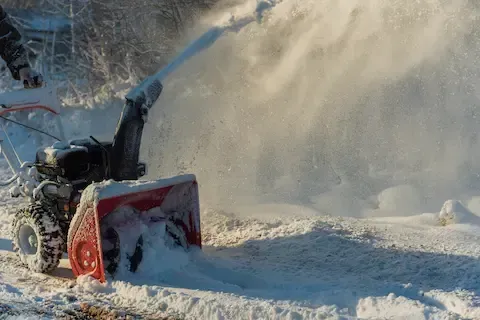
Track-driven snow blowers offer the best performance on steep Dubuque bluff driveways. The wide track footprint distributes weight evenly and grips packed snow that would send wheeled machines sideways. If you are purchasing equipment specifically for a hillside property, track-drive is worth the additional investment.
For hand tools, a lightweight pusher-style shovel is not appropriate on a steep grade. A flat-blade spade or a combination shovel with a bent handle lets you chip and lift without the blade skipping downhill. Ergonomic grips matter because you will be working in a braced stance rather than the upright position that flat driveways allow.
Traction equipment for the operator is not optional. Screw-in ice cleats or microspike attachments worn over winter boots provide the grip needed to stand safely while operating a blower or shovel on a glazed bluff surface. Dubuque's emergency rooms see preventable falls every winter from homeowners working without adequate footwear.
Ice Management Specific to Hillside Driveways
Pre-treating a steep driveway before a storm gives you a significant advantage. Liquid magnesium chloride or calcium chloride brine applied to dry pavement before precipitation arrives prevents bonding between snow and surface. This dramatically reduces the force required to clear the driveway after the storm and slows refreeze at the base of the slope.
Granular rock salt loses effectiveness below about fifteen degrees Fahrenheit, which is a temperature Dubuque regularly reaches during January cold snaps off the Iowa plains. Calcium chloride pellets work to well below zero and generate heat on contact, making them the better choice for deep-cold ice events on bluff driveways. Sand can improve traction temporarily but will run off with melt water and should not be relied on as a primary treatment.
The street apron at the base of a bluff driveway is the highest-priority ice zone. This is where a vehicle descending must brake and where backing out requires controlled acceleration on a slick surface. Keeping this zone treated throughout a storm event, not just after it ends, is the tactic that prevents the most incidents.
Timing and Frequency During Active Storms
Clearing a bluff driveway in stages during a heavy snowfall is always easier than waiting until accumulation stops. Three inches of loose snow clears in a fraction of the time that six inches of settled, partially compacted snow requires. On a grade, compaction happens faster because the weight of upper layers presses down onto lower ones and the surface temperature differential between pavement and air accelerates settling.
If you are not available to clear during the storm, communicating that timing with a snow removal service in advance matters. Many Dubuque homeowners on the bluffs schedule priority windows with their contractors so that service happens mid-storm rather than only at the end, which is the approach that keeps a steep driveway functional throughout a multi-hour event rather than becoming impassable by the time it stops snowing.
For additional context on how different clearing methods compare for various driveway types across the city, the driveway clearing methods primer covers the full range of options and trade-offs worth reviewing before committing to any single approach for your property.
Knowing When to Call a Professional
Some bluff driveways in Dubuque present conditions that go beyond what a homeowner with consumer-grade equipment should attempt independently. A driveway exceeding twenty percent grade, a surface with significant ice beneath new snow, or a property without a safe flat area to stage snow are all situations where professional equipment and trained operators reduce both injury risk and property damage risk substantially.
Bluff districts along the west side of Dubuque, including sections above Eagle Point Park and the steep residential streets off Rhomberg Avenue, see recurring calls for professional intervention after storms that might be routine in flatter parts of the metro. If your driveway has ever forced you to park at street level and walk up because it was too icy to drive, that is a clear signal that your current clearing approach needs adjustment before the next storm arrives.
